
A region that works for everyone
A region that works for everyone
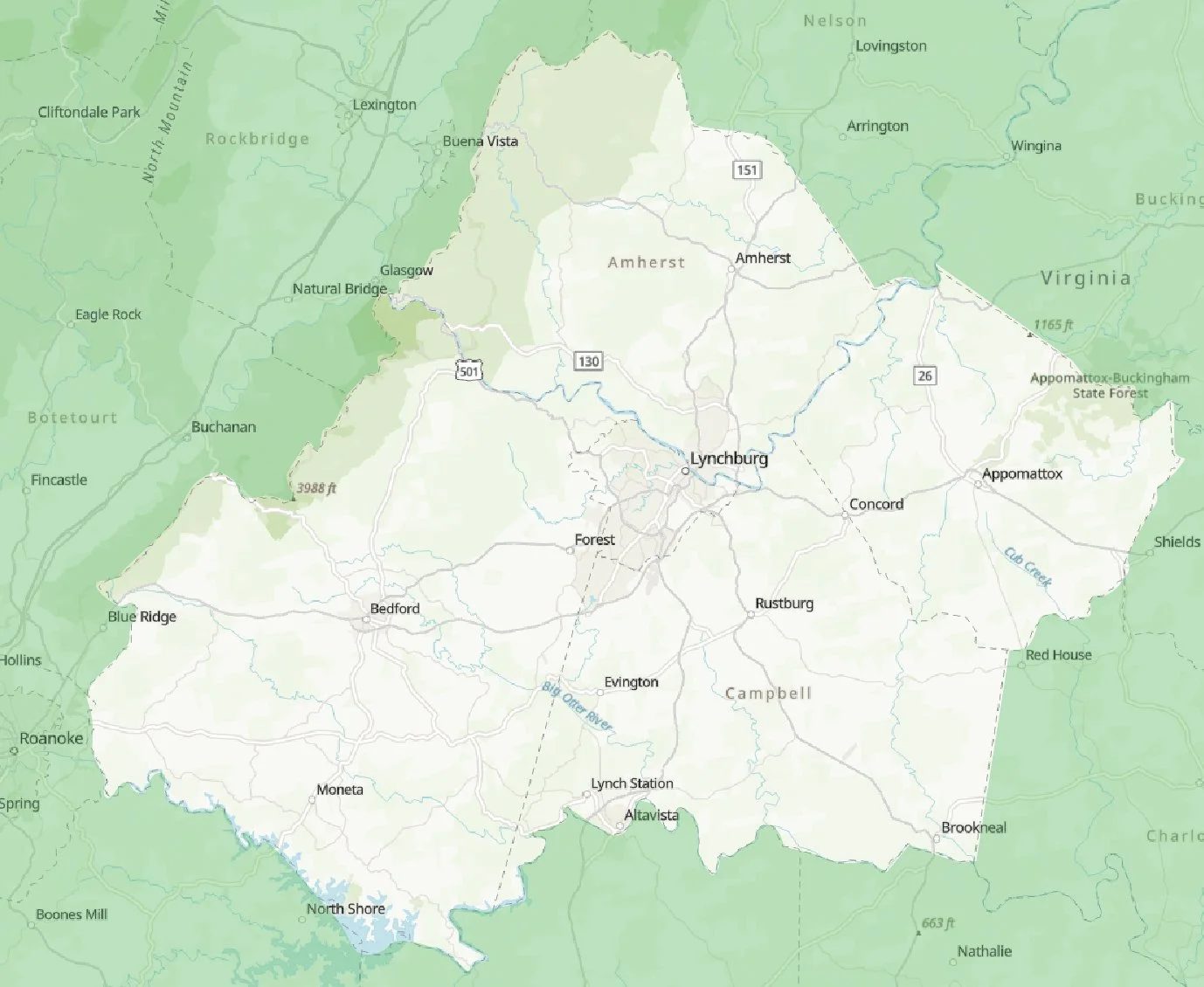
A new Comprehensive Economic Development Strategy, known as a CEDS, is being developed for the Central Virginia Planning District. The strategy document will enable the region to become an Economic Development District designated by the U.S. Economic Development Authority.
The Central Virginia Planning District Commission commissioned the work on behalf of the region. Short, Elliott, Hendrickson, Inc. (SEH) was selected to develop the plan. The primary contact with SEH is Chris Chittum, who is located in Roanoke.
SEH will work with stakeholders around the region to gain input and insight on the region’s economy and the needs for the future. A CEDS Steering Committee made up of economic development leaders has been formed to oversee and guide work on the project. The committee will begin meeting in January and the project is scheduled to be completed by June 2026.
A regional strategy will provide a unified vision for coordinated action and cooperation. It will also enable the region to access grant funds and other resources for implementation from the U.S. Economic Development Authority.

A CEDS Plan should set the foundation for economic development work and build capacity for completing that work. It should also establish an understanding of interconnectedness and a mindset for collaboration, while ensuring that the region is eligible for federal grant funding from US EDA.
The Plan includes four main elements:
-
Presents a clear understanding of the local economic situation, supported by current, relevant data. This element will show how populations have grown in the region, how income differs across demographics, and how the structure of the economy contributes to economic disparities.
-
A SWOT (Strengths, Weaknesses, Opportunities, Threats) Analysis uses the relevant data and background information to help identify the critical internal and external factors that speak to the region’s unique assets and competitive positioning. A SWOT analysis identifies the region’s competitive advantages—those indigenous assets that make the region special or competitive in the national and global economies—juxtaposed against those internal or external factors that can keep a region from realizing its potential.
-
The strategic direction and corresponding action plan contained within the CEDS are the heart and soul of the document. The strategic direction should evolve from a clearly defined vision with prioritized goals and measurable objectives. A successful action plan should then focus on those regionally-driven strategic priorities that will be undertaken to bring the prosperity aspirations of the region’s stakeholders to fruition.
-
The evaluation framework serves as a mechanism to gauge progress on the successful implementation of the overall CEDS while providing information for the CEDS Annual Performance Report, as required by EDA. Performance measures should be identified to evaluate the progress of activities in achieving the vision, goals and objectives.
Insights about Central Virginia
Diverse Economic Base
Nuclear technology
This industry brings high-paying jobs and opportunities for global export, making it strategically significant for this plan. To ensure the industry stays strong, the region should consider priorities in workforce alignment, supply chain development, and innovative partnerships within this industry.
Healthcare
This industry supports jobs at all ranges of income and education. Strategies around workforce alignment and health research and innovation will help this industry stay strong. It will also be important to support investments in technology and broadband to ensure access to quality healthcare, as this is an important part of attracting workforce and supporting good quality of life in the region.
Agriculture
Decades of change in this industry may warrant consideration of strategic priorities focused on maintaining the rural character of the region. If the CVPD values the character that small and mid-sized farms bring to the region, priorities may include strategies to support them, such as community supported agriculture (CSA) programs, soil health strategies, agricultural workforce development, farmland protection policies, and value-added enterprises for farms (agritourism, specialty foods, etc). The region may also want to consider how urban and rural can support each other, with access to agritourism supporting the quality of life for urban residents while also adding value to small farming businesses.
Higher Education
Higher Education, overall, is currently experiencing some significant challenges with declining enrollments due to demographic shifts, rising costs, erosion of public trust, and difficulties with workforce alignment in the ever-changing landscape of AI integration. The higher educational institutions in the CVPD region seem to be weathering this storm better than most, however, it will be important to consider strategic priorities that support the long-term strength of this cluster – continuing to leverage the relationships between higher education and other key industries in the region.
Workforce & Talent Pipeline
Workforce is THE driving issue for economic development in the current economy and will be for the foreseeable future. Age demographics is an important statistic when it comes to workforce trends as the Boomer Generation is exiting the workforce and Gen Z is entering. Gen Z is estimated to be 27% of the workforce in 2025 and is projected to reach 34% by 2034 according to the Organization for Economic Cooperation and Development. The region is trending comparatively young, but staying on that trend will be important. Therefore, it will be worth considering priorities focused on building environments that are attractive to the changing workforce demographic.
Entrepreneurship & small businesses
Especially in light of the values of younger generations, it will be important to consider priorities around building a strong entrepreneurial infrastructure. The data shows that the region is fairly strong in this regard – with a decent innovation index and solid access to capital for small businesses. Although with almost 85% of jobs held in firms older than 10 years, this may be an area to focus some strategy discussion. It may also be helpful to strategize around business succession planning – allowing retiring entrepreneurs to take wealth into retirement, while also giving younger generations opportunity to pursue business ownership without starting from scratch. Strategies focused on maintaining good access to capital for diverse small-businesses will also be worth exploring.
The diverse economic base provides a strong foundation for the regional economy. The three-pronged anchor of Manufacturing, Health Care, and Education provides stability as well as opportunity for applied R&D, industry-academia collaboration, and workforce development. Information and Logistics sectors seem to be lagging national averages slighly, which could present an opportunity for growth. It is important to pay attention to industry trends and to use that information to inform decisions on priorities around the needs of important industry clusters and diversity in available opportunities. Below provides some details on a few key industry clusters in the region.
Manufacturing
The regional significance, along with the changing nature, of the Manufacturing sector, makes it important to consider when development economic development strategy for the region. It will be important to develop strategies that will support the training and upskilling of the manufacturing workforce, as well as the continued investment in infrastructure, supply chain resilience, sustainable business practices, and technology that will support the continued strength of this sector.
Tourism
It will be worth considering strategies for the region to lean into the recent growth in the tourism sector. These strategies might prioritize investments in signature attractions, event infrastructure and downtown placemaking, which would encourage longer stays and year-round visitation. Tourism growth can also be leveraged to support entrepreneurship and small business development opportunities.
Wealth & Affordability
While the per capita income isn’t bad within the region, this is certainly an area to pay attention to as economic development strategies are developed. Some ways to boost per capita income include job training programs that allow for upskilling, support for job growth in high-growth sectors, and investments in digital infrastructure to ensure residents and businesses have access to technology, to name a few. Housing production also has become a major focus of economic development in recent years, as we see housing affordability rise in its weight as a location factor for businesses. Communities that solve this puzzle sooner may be on their way to more economic success and growth than those that are measured in their response.
Housing
As was pointed out in the Wealth & Affordability Section, housing production has become a key factor in economic development. The housing starts data in this section shows strong housing development trends, but housing affordability is a major barrier. It will be important to consider housing strategies that match available housing to wage trends to be sure that housing is affordable for the workforce in the region. People should be able to live in the community that they work and vice versa.
Childcare
Strategic Location & Infrastructure
The JLARC study provides strong, evidence-based justification for including childcare as a priority strategy in the CEDS. Without addressing affordability, availability, and workforce constraints in the childcare system, the region will continue to face structural barriers to labor force participation, business growth, and economic resilience. The foundational issue with childcare is that wage rates within the industry are not competitive in the tight labor market. This is a difficult issue to overcome because the industry also has a price ceiling as rates exceed the return of the parents being in the workforce. The recognition that this is a larger economic issue should bring other revenue sources to the table to help.
The region’s strategic location offers solid benefits from an economic development standpoint. Continued investment in the US Highway connections will be important as the country struggles with aging infrastructure. The importance of air travel and technology infrastructure and how to best support those areas should also be a focus for strategic discussions within the region.
Get in Touch
We’d love to hear from you! The Central Virginia Planning District Commission has contracted with SEH to lead this planning effort, so the primary contacts are:
Chris Chittum - cchittum@sehinc.com
Brian Fukuda - bfukuda@sehinc.com